Showing posts with label AI. Show all posts

Monday, 4 November 2019

MIT engineers working on contextual navigation to enable robots deliver to your doorstep

Image Source: MIT News
Traditional navigation systems used by delivery robots use the approach where areas are pre-mapped and then algorithms guide the robot to reach locations in that mapped area. However, as can be understood, it is not possible to map the path to every front door of every house. Doing that would also raise a lot of privacy issues.

We humans do not need to memorize the layout and orientation of every house in a locality when we want to reach the front door of any given house in that locality. We can figure it out when we are able to locate things like the garage, driveway, lawn gate etc. MIT engineers working at the Aerospace Controls Lab believe this approach is exactly what is needed to solve automated last-mile delivery problems.

The power of machine learning allows the MIT engineers to train the AI in the robots to recognise  clues in its environment such as driveway, sidewalk, etc. to plan out a route to its intended destination. For example, if a robot is instructed to deliver a package to someone's front door, it might start on the road and see a driveway, which it has been trained to recognize as likely to lead toward a sidewalk, which in turn is likely to lead to the front door.

“We wouldn’t want to have to make a map of every building that we’d need to visit,” says Michael Everett, a graduate student in MIT’s Department of Mechanical Engineering. “With this technique, we hope to drop a robot at the end of any driveway and have it find a door.”

Here is video demonstration of the technology at its current state:


At the core of the technology is the process to teach robots to recognize objects by their semantic label. An example offered is the robot recognizing a door as a door and not as a solid rectangular obstacle. The researchers used an algorithm to build up a map of the environment as the robot moved around, using the semantic labels of each object and a depth image. This algorithm is called semantic SLAM (Simultaneous Localization and Mapping). 

This algorithm goes a step further than similar existing algorithms in the facts that it not only maps the objects that it recognizes in its local environment but also tries to figure out the most efficient path to it's semantically learned destination.

Imagine if delivery robots start to interact with elevators over standardized communication protocols and they learn to interpret signage, then they may even be able to deliver to doors of apartments in high-rises. Maybe one day, advancement of this approach will even lead to drones recognising balconies of apartments. Imagine living on the 15th floor and getting your pizza drone delivered right to your balcony!


Thursday, 31 October 2019

Microsoft research AI project HAMS automates driver's license tests in India


Image Source : Microsoft News

As AI starts to increasingly pervade into every aspect of our lives, we have been hearing about more and more cases of where they are getting implemented to solve real world problems effectively. One such case is Microsoft's research AI Project named HAMS which is short for "Harnessing Automobiles for Safety". This project was initially conceived to monitor drivers and their driving with an aim to improve road safety.

“The main challenge in the traditional driver’s license test is the burden placed on the human evaluators and the resulting subjectivity that a candidate faces. Automation using HAMS technology can not only help relieve evaluators of the burden but also make the process objective and transparent for candidates,” says Venkat Padmanabhan, Deputy Managing Director, Microsoft Research India, who started the HAMS project in 2016.

HAMS utilizes the front and rear camera's of a smartphone mounted on the windscreen in conjunction with other sensors to not only monitor the vehicle's precise trajectory and the road in front but also the driver's gaze. For instance, it checks whether the driver scanned their mirrors before effecting a lane change, and even more rudimentary, whether the person taking the test is the same as the one who registered for it. The comprehensiveness of the test can be judjed by the fact that it also monitors things such as time taken, number of stoppages and number of retries while performing manoeuvres such as parallel parking.

Today, if you take the driver’s license test at the Dehradun RTO, you will be doing so in just the company of a smartphone affixed to your car’s windshield. HAMS, running on the smartphone and on an edge server onsite at the testing track, will do the rest and produce a detailed report shortly after you finish navigating through the test manoeuvres.

“The successful deployment of the HAMS-based driver license testing at the Dehradun RTO is a significant step towards the Transport Department’s goal of providing efficient, world-leading services to the citizens of Uttarakhand. We are proud to be among the pioneers of the application of AI to enhance road safety,” said Shri Shailesh Bagauli, IAS, Secretary, Government of Uttarakhand.

Here is a video of HAMS in action:

  
Although the comprehensiveness of the tests will ensure that we get better and safer driver on the roads but it a distinction has to be made between testing a driver for safety and testing a driver for skill. In the parallel parking example sighted the driver's skill is being tested. The time taken and the number of re-tries would at most cause inconvenience to others rather than hamper their safety. On the other hand strictest scrutiny must be done for things like maintaining lane, braking, lane changing, timing of using indicators, etc. as these are factors related to safety.

Monday, 28 October 2019

Robotic hand made by Elon Musk's OpenAI learns to solve Rubik's Cube

Image Source : OpenAI Blog

Last year we were amazed by the level of dexterity achieved by OpenAI's Dactyl system which was able to learn how to manipulate a cube block to display any commanded side/face.If you missed that article, read about it here.

OpenAI then set themselves a harder task of teaching the robotic hand to solve a Rubik's cube. Quite a daunting task made no easier by the fact that it would use one hand which most humans would find it hard to do. OpenAI harnessed the power of neural networks which are trained entirely in simulation. However, one of the main challenges faced was to make the simulations as realistic as possible because physical factors like friction, elasticity etc. are very hard to model.

The solution they came up with was a new method called Automatic Domain Randomization which endlessly generates progressively more difficult environments for the simulations to solve the Rubik's cube in. This ensures that real world physics gets covered in the spectrum of environments generated and hence bypasses the need to train the simulations on highly accurate environmental models.  

One of the parameters randomized was the size of the Rubik’s Cube. ADR begins with a fixed size of the Rubik’s Cube and gradually increases the randomization range as training progresses. The same technique is applied to all other parameters, such as the mass of the cube, the friction of the robot fingers, and the visual surface materials of the hand. The neural network thus has to learn to solve the Rubik’s Cube under all of those increasingly more difficult conditions.

Here is an uncut version of the robot hand solving the Rubik's cube:


To test the limits of this method, they experimented with a variety of perturbations while the hand is solving the Rubik’s Cube. Not only does this test for the robustness of the control network but also tests the vision network, which is used to estimate the cube’s position and orientation. It was found that the system trained with ADR is surprisingly robust to perturbations. The robot can successfully perform most flips and face rotations under all tested perturbations, though not at peak performance.

The impressive robustness of the robot hand to perturbations can be seen in this video:


Tuesday, 7 August 2018

AI powered face-recognition system to be used in 2020 Olympics


Image Source : s3.reutersmedia.net
Japan is the land which gave us technological inventions like the Walkman, VHS, Bullet Train, Pocket Calculator, Laptop and many more which have changed the way we live. So it is no surprise to know that they have decided to utilize the power of the latest technology that is rapidly revolutionizing the world we live in - Artificial Intelligence (A.I.)

NEC has built this technology that will allow athletes, officials and others accredited for the games to have hassle free access to restricted areas by letting the system recognize their faces. The identity cards given to accredited individuals by the organizers will have their facial data which will be collected beforehand. The individuals will have to hold up the cards to a terminal present at each security check point while looking into the camera to cross verify their identity.  

NEC is a global leader in technologies that perform identification using facial recognition, iris scanners, fingerprints, palm prints, finger vein, voice and ear acoustics. The Terminals are going to use its "Bio-IDiom" which has reportedly been consecutively named the world's top face recognition technology four times by the U.S. National Institute of Standards and Technology.

Here is a video of the Terminal in Action:


This means that the process of verification will get faster and also more secure as users will not be able to pass on their access cards to others for misuse. “This latest technology will enable strict identification of accredited people compared with relying solely on the eyes of security staff, and also enables swift entry to venues — which will be necessary in the intense heat of summer. I hope this will ensure a safe and secure Olympic and Paralympic Games and help athletes perform at their best.” said Tsuyoshi Iwashita, the security executive director for the games.


Tuesday, 31 July 2018

Elon Musk's startup builds AI to make robotic hand move like humans

Image Source : OpenAI Blog


OpenAI is a company that was co-founded by Elon Musk in 2015 as a non profit research company that aims to discover and enact the path to safe artificial general intelligence (AGI).

One of the most remarkable features that evolution has bestowed upon us other than our brain is our hands. It is a belief among many scientists that our opposable thumbs are in fact, what allowed us to become a superior species ahead of other highly intelligent creatures like Dolphins and Elephants.

In a blog post published by OpenAI on Monday, they claim to have harnessed the power of AI and deep learning to bestow the dexterity of the human hand to robots. Their system named Dactyl is trained entirely in simulation and is able to apply this training in the real world.

Here are the examples of the complex movements the robotic hand is capable of performing:

 
Video source : blog.openai.com

The degree of freedom of a robot, to explain in a simplified way, is the number of ways it can move. In most Industrial applications a robotic arm with 7 degrees of freedom is considered quite advanced. The Dactyl trained arm of OpenAI has 24 degrees of freedom. Furthermore, it has the capability to work with partial information from its sensors and manipulate objects of different geometry.

Here is a schematic of how OpenAI trains the Robot:
Image Source : OpenAI Blog


As can be understood by the above illustration,  the robot is trained entirely in simulation. This allows it to be taught much faster. Also, the setup uses normal RGB cameras to see the object by running orientation estimation algorithms in neural networks. This means that it does not need special objects that are designed for camera tracking, to function. 


This can have amazing applications in handling objects harmful to humans. The success of the technology could be extrapolated to other movements possible by humans to one day build complete humanoid robots like the ones we saw in the Movie "I,Robot".


Friday, 27 July 2018

Google unveils tiny AI chips for offline Machine Learning inference


Google's Edge TPU | Image Source : cdn.vox-cdn.com

Machine Learning services provided by Google until now have completely been cloud based. This means that the Cloud had to be used not only for storing Data but also for analysis and inference by the Machine Learning algorithms being run by Google's Tensor Processing Units (TPU) located in its data centers.

Google's TPU | Image source : cdn.vox-cdn.com

As you can very well guess, this kind of setup has the drawbacks of being dependent on internet connectivity and being more vulnerable to attacks by hackers trying to steal live machine data. This has been one of the main reasons that OEMs (Original Equipment Manufacturers) have been reluctant to utilize Google's Machine Learning services.  

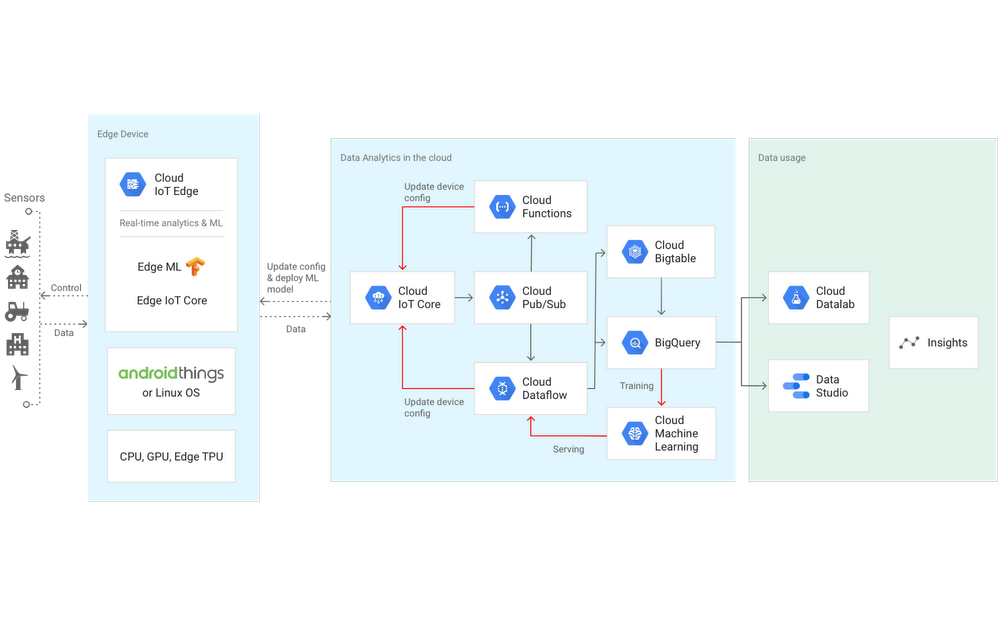
The newly unveiled Edge TPU seeks to overcome that hurdle by providing the inference part locally on the device to which it is attached. The customer can store older machine data in Google's cloud, use it to train the Edge TPUs and then integrate them into their Machines to provide intelligent inference without having to connect to the cloud.

Here is Google's illustration explaining the setup:
Click to view larger | Image Source : blog.google
Google cloud's Vice President of IoT, Injon Rhee said “Edge TPUs are designed to complement our Cloud TPU offering, so you can accelerate ML training in the cloud, then have lightning-fast ML inference at the edge. Your sensors become more than data collectors — they make local, real-time, intelligent decisions.”

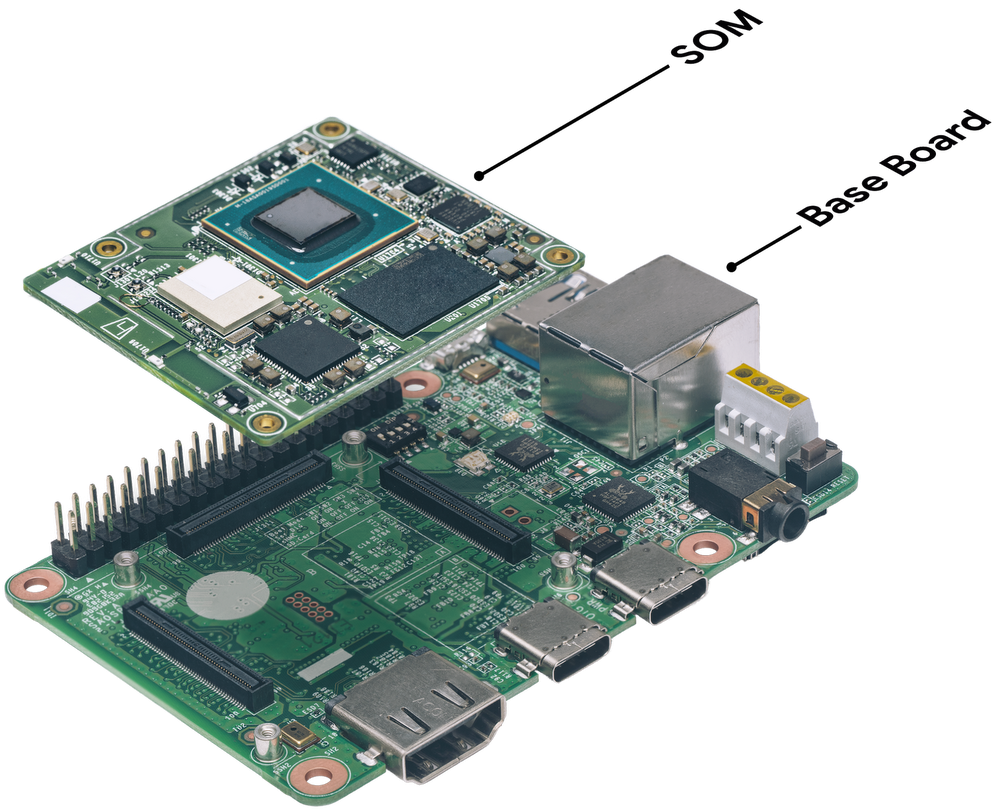
Google is also making a development kit available so that users can test out the technology before deciding to incorporate it into there machines. It has a system on module (SOM) that combines Google’s Edge TPU, a NXP CPU, Wi-Fi, and Microchip’s secure element in a compact form factor.

Image Source : blog.google
 Here are what some of Google's customers are saying about the new technology:

“Our Intelligent Vision Inspection solution enables us to deliver enhanced quality and efficiency in the factory operations of various LG manufacturing divisions. With Google Cloud AI, Google Cloud IoT Edge, and Edge TPU, combined with our conventional MES systems and years of experience, we believe Smart Factory will become increasingly more intelligent and connected,” says Shingyoon Hyun, the CTO of LG CNS. “With Intelligent Vision Inspection, we are eager to make a better working place, raise the quality of product, and save millions of dollars each year. Google Cloud AI and IoT technologies with LG CNS expertise make this possible.”

"Smart Parking enables our customers to deploy and manage frictionless parking services for both on-street and off-street situations. We are very excited about our ability to use Cloud IoT Edge and Edge TPU for building ML-enabled parking experiences for our customers,” says John Heard, CTO of Smart Parking. “At Smart Parking, our mission is to re-invent the parking experience for every solution user. The introduction of Cloud IoT Edge, Google Cloud IoT enables us to deliver on this promise in new ways within our SmartSpot gateway products.”

“At XEE, we’re working to make driving simpler, safer and more economical through our connected car platform,” explains Romain Crunelle, CTO at XEE. “Cloud IoT Edge and Edge TPU will help us to address use cases such as driving analysis, road condition analysis, and tire wear and tear in real time and in a much more cost efficient and reliable way. Enabling accelerated ML inference at the edge will enable the XEE platform to analyze images and radar data faster from the connected cars, detect potential driving hazards and alert drivers with real-time precision."

"Trax is helping retailers build a sound foundation for digital transformation,” says David Gottlieb, General Manager, Global Retail at Trax. “Cloud IoT Edge and Edge TPU will help address critical use cases such as improving on shelf availability (OSA), optimizing click-and-collect processes, and modernizing the shopping experience. This Google technology will enable accelerated machine learning at the edge—in-store images are captured and flowed through the Trax platform, where those digitized shelf images are analyzed at an increasingly faster rate providing retailers with the agility to both respond to issues in real time and to consistently delight shoppers.”


With all major companies pushing towards Industry 4.0 solutions, the Edge TPUs could really help Google bound ahead in capturing the 11.1 Trillion Dollar IoT market predicted by McKinsey. 


Do leave your comments and thoughts below.

Saturday, 21 July 2018

Self-Driven Car Waymo - How it covered 8 Million Miles in the Real World!

Image Source : Techcrunch.com

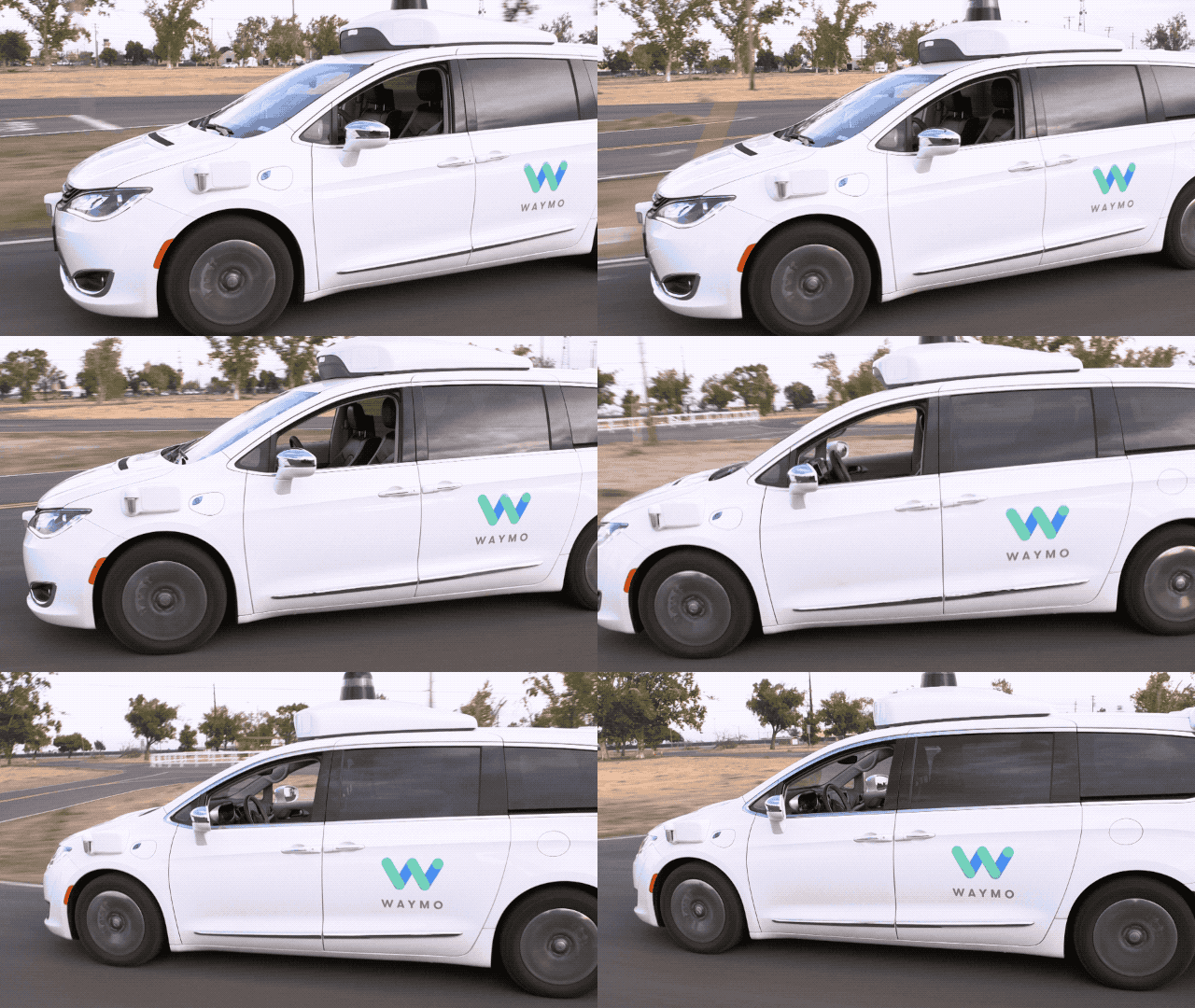
Waymo is the former self-driving project of Google which is now directly under its parent company - Alphabet. Before we get into the details of the figures published by Waymo, let us try and understand how the Technology in Waymo works:

The Waymo cars are fitted with numerous sensors and are powered by software that enables it to detect pedestrians, cyclists, vehicles, road work and more. This is achieved by LiDAR technology which can create a 3D image of the environment of the Car up to three football fields away coupled with powerful Artificial Intelligence and Machine learning algorithms.

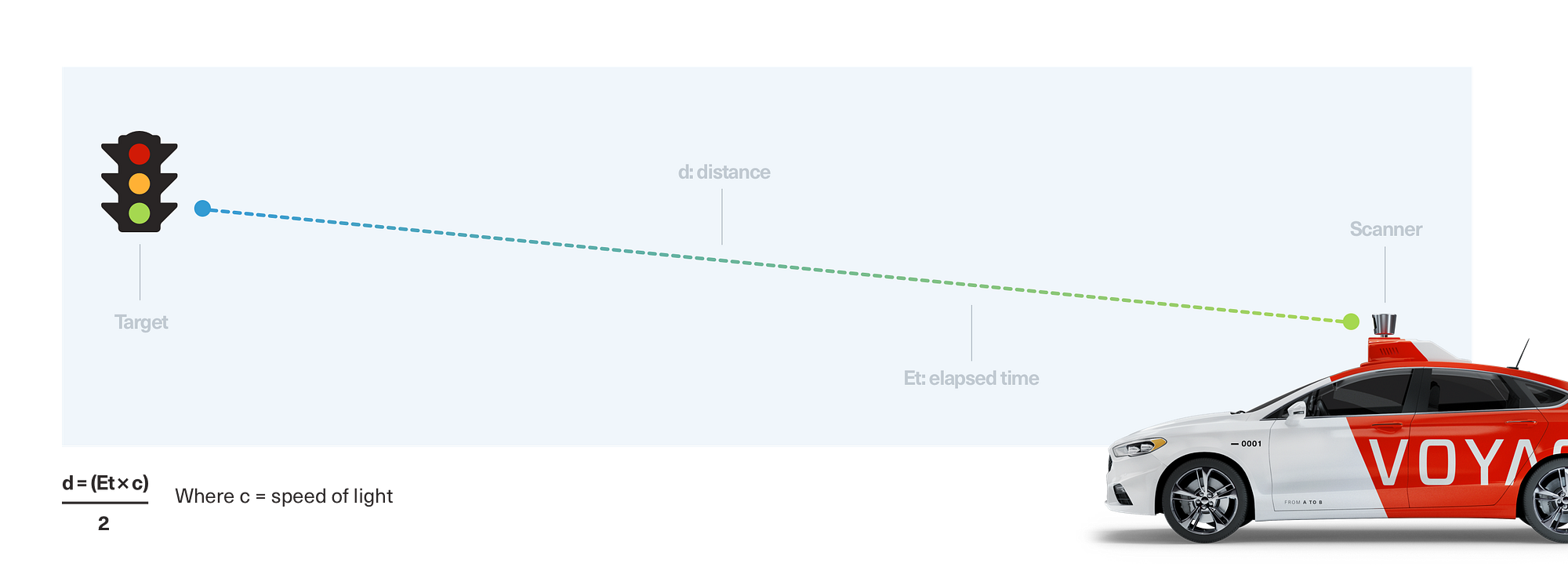
The LiDAR technology works by releasing millions of laser beams per second in all required directions and using the time required for the laser beams to bounce back to its sensor to calculate the distance to the obstacles. The principal is exactly the same as in Radar, the difference being that Lasers are used in LiDAR instead of radio waves. This technology can give extremely accurate distance measurements (+-2Cm).


Image Source : cdn-images-1.medium.com | Click Image to view Larger


The illustration demonstrates how Waymo detects all Cars, cyclists and pedestrians at a crossing. It also illustrates how it uses its machine learning capabilities, which relies on 8 Million Miles/12.87 Million Kilometers (you read that correct) of real world experience, to predict the behaviour of all the road users it has detected.

Image Source : waymo.com | Click Image to view Larger

In this example, Waymo says that the sensors detect the outstretched left arm of the cyclist and its software is able to predict from this that the Cyclist will be moving to the left side of the lane. On the basis of this prediction the software then makes the Car slow down allowing the cyclist to pass safely in front of it.

Image Source : waymo.com | Click Image to view Larger


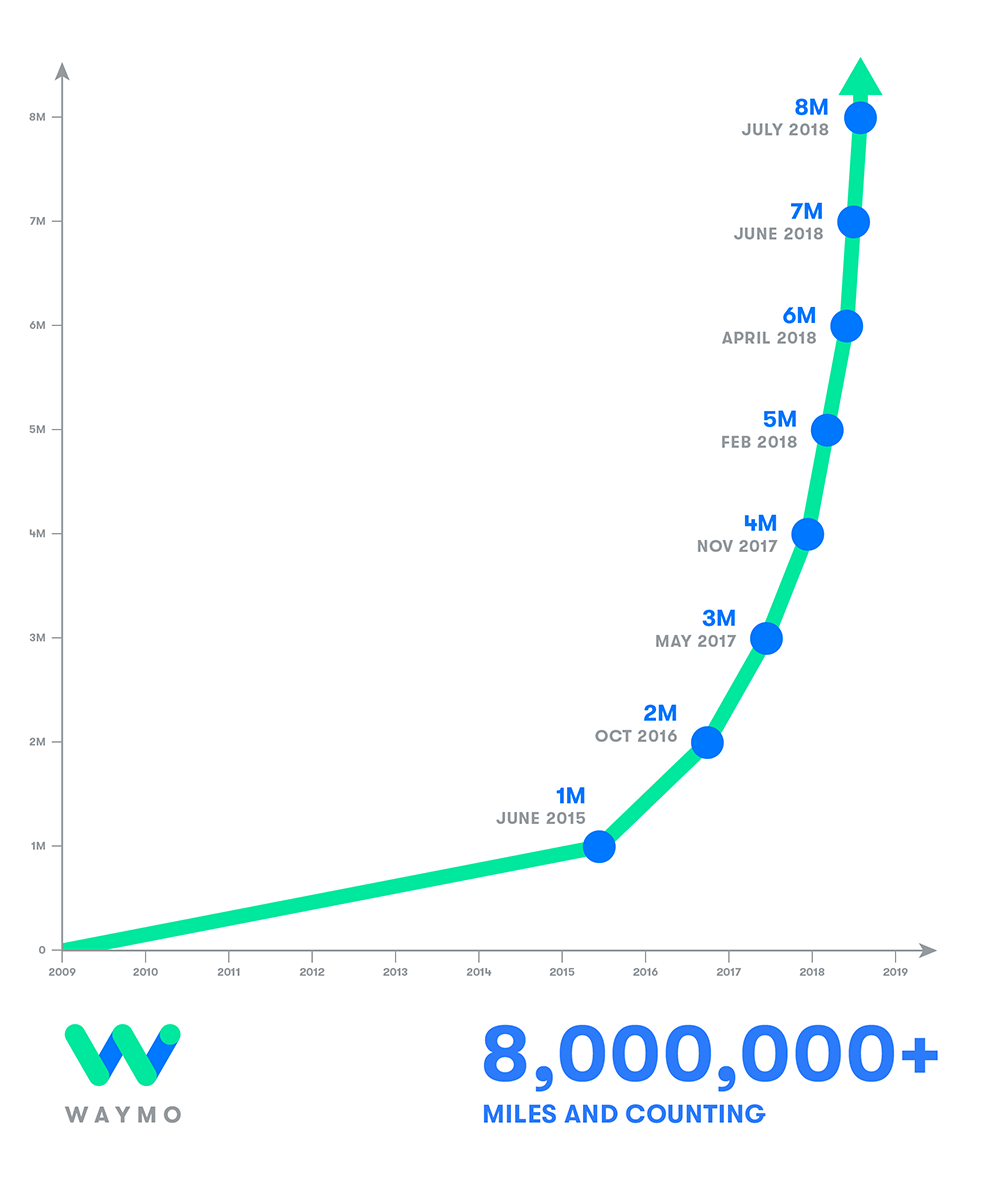
Waymo published that it has driven 8 Million Miles/12.87 Million Kilometers since 2009, which averages at 25,000 Miles/40,000 Kilometers per day. The total distance mentioned would take an average American 300 years to cover. These numbers have been put out by Waymo since everybody knows that Machine learning, much like human learning, gets better and better with experience but unlike us humans, it never forgets what it learns. Waymo presently has a fleet of 600 self-driven minivans in 25 American cities.

Image Source : waymo.com | Click Image to view Larger

400 residents of Phoenix have already been trialing an app to hail Waymo's Chrysler Pacifica Hybrid Minivans and this has received much attention. The company is further looking to apply its technology to three other areas - logistics, public transportation and personally owned vehicles.

Here is a list of very informative FAQ's published by them : https://waymo.com/faq/


Check out Zoox, another promising self-driving car company that aims to rival Uber with a completely new approach to autonomous cars. 


Do leave your comments and reactions below and don't forget to subscribe to stay updated.

Wednesday, 18 July 2018

Zoox - The self-Driving car that could beat Uber


Image Source : Bloomberg

Zoox, a self driving car startup is close to raising 500 Million Dollars at a 3.2 Billion Dollar Valuation as reported by Bloomberg Business Week. Given the competition it faces in the space of autonomous Cars from giants like Google, Daimler, Lyft and Uber, that valuation might seem crazy. In order to understand the valuation let us get a bit deeper into the spaces of autonomous driving and how Zoox is different from the competition.

App Cabs not only have to provide a healthier means of earning to Drivers while operating with same fuel costs as traditional Cabs but they also have to be dependent on the work hours put in by the Drivers for Revenue. In India the increasing ride cancellation rate by App Cab drivers is also leading to a lot of disenchantment among users. Given this situation, it is no wonder that all the major companies are looking for the most obvious solution - removing the Driver completely. 

Image Source : Bloomberg

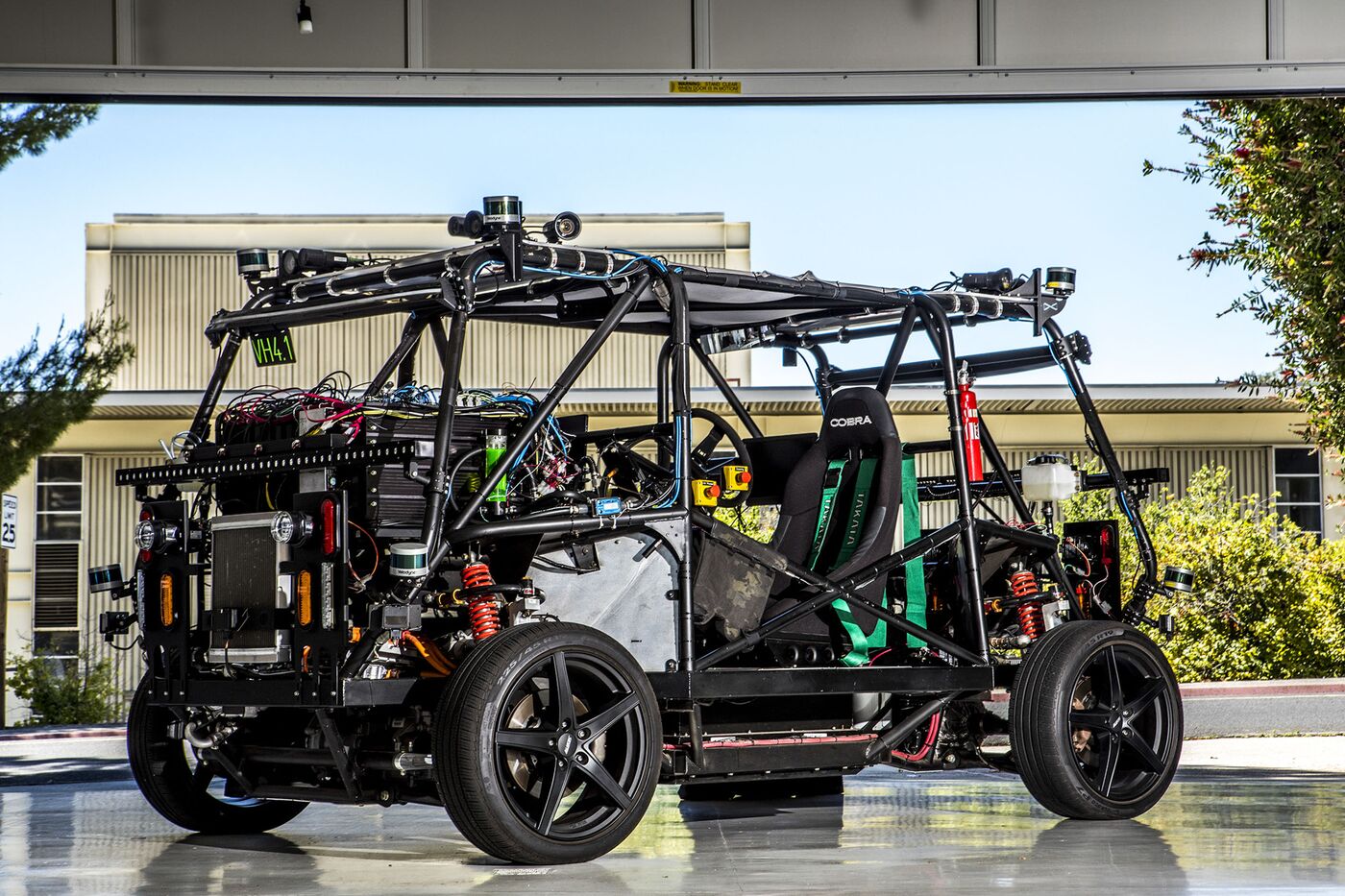
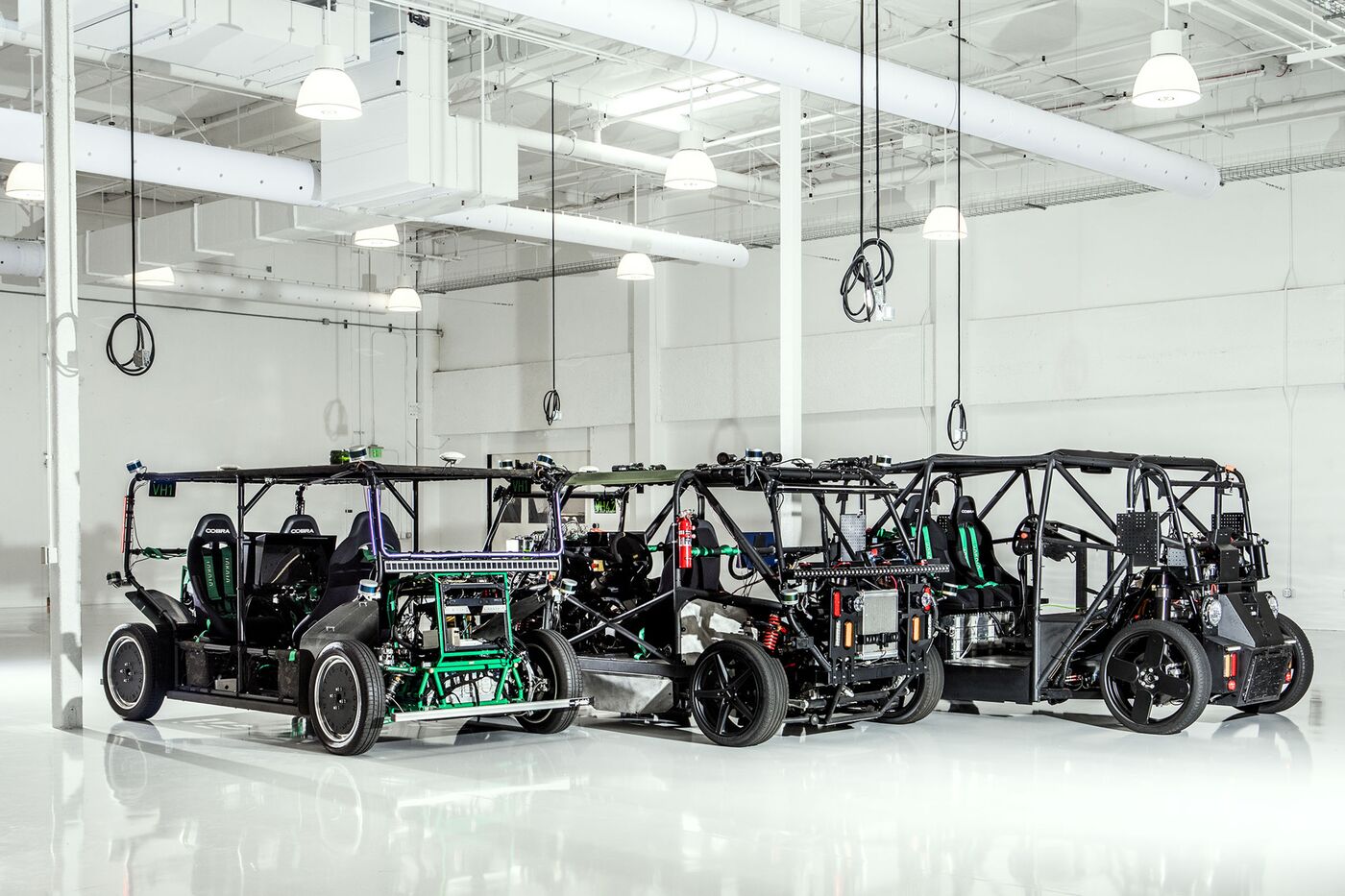
All the major companies have concentrated their efforts in fitting existing Cars with the Technology. Zoox, on the other hand aims to change the concept of the Automobile itself - designing a Car for the Autonomous Technology. Their Car has the following features:
  1. It is completely electric.
  2. It traverses equally in forward and reverse directions which means that it does not have to turn to go in the opposite direction.
  3. It has special screens on its windows to display customized welcome messages.
  4. It can automatically make noises to communicate with pedestrians.
  5. It can rotate the orientation of its wheels to align them in a 90 degree angle to the body to allow it to traverse like a crab (say bye bye to the parallel parking woes)

Here is a glimpse of  how a Zoox Car perceives the world around itself:

Image Source : Zoox

As you might have guessed from studying the screenshot, the blue boxes are what its AI identified as Cars, purple boxes are people, red boxes are red traffic lights and green boxes are green traffic lights. The thing that differentiates the use of AI in image/pattern recognition from autonomous driving is that in autonomous driving, the AI also has to predict outcomes in the near future to avoid collisions. So basically it not only has to identify the objects it senses correctly but also predict the path they are going to take or not take.

Zoox started in a Garage with just 6 people and now has around 500 employees working at a 130,000 square feet headquarter in Foster City. They are aiming to put their first vehicles on the road by 2020.


Here is there story as covered by Bloomberg:


When do you think autonomous cars like these will become reliable enough to become commonplace around the world? Do leave your comments and reactions below and don't forget to subscribe.